
I'll be honest with you, I spent years trying to figure out what kind of man I was supposed to be. And man, the messages were confusing.
The world kept telling me one thing. God's Word kept telling me something completely different. And somewhere in the middle, I was just trying to keep it all together, wondering if anyone else felt as lost as I did.
Maybe you've felt that same tension. You scroll through social media and see these images of what a "real man" is supposed to look like. Strong. Stoic. Never showing weakness. Always in control. The kind of guy who doesn't cry, doesn't ask for help, and definitely doesn't talk about his feelings.
But then you open your Bible, and you see something totally different. You see men who wept. Men who served. Men who admitted their weaknesses and leaned hard into God's strength.
So which one is right? Which version of masculinity is actually better for your faith journey?
Let me walk through this with you, because I think the answer matters more than we realize.

What the World Says About Being a Man
Cultural masculinity has some pretty clear expectations. I grew up with them. Maybe you did too.
Be tough. Don't show emotion, that's weakness. Dominate in your career. Provide financially at all costs. Be physically strong. Be the alpha. Win at everything. Never back down from a fight. Real men don't cry. Real men don't need help. Real men certainly don't admit when they're struggling.
I tried to live up to that for years. And you know what? It nearly destroyed me.
I remember times when I was drowning in stress, but I couldn't tell anyone because "real men" handle their problems alone. I remember swallowing down emotions because showing them felt like failure. I remember measuring my worth by my accomplishments, my bank account, my ability to look like I had it all together.
The cultural definition of masculinity builds your identity on external things, your achievements, your strength, your dominance, your success. And here's the brutal truth: those things can all disappear in a heartbeat. Then who are you?
Cultural masculinity also creates some weird contradictions. It tells you to be emotionally distant from your family while somehow being their provider and protector. It tells you to be strong while making sure you never appear vulnerable enough to actually connect with anyone on a deep level.
Is it any wonder so many men today feel isolated, disconnected, and like they're performing a role rather than living authentically?
What God's Word Actually Says
Now let's look at what Scripture says about masculinity, because it's radically different.
The Bible doesn't call men to be emotionless robots. It calls them to be tenderhearted. "Be kind to one another, tender-hearted, forgiving each other, just as God in Christ also has forgiven you" (Ephesians 4:32, LSB).
Tenderhearted. That's not exactly what the culture celebrates, is it?
Think about the men in Scripture. David, the mighty warrior, wrote poetry about his emotions and wept openly. He danced with joy before the Lord without caring what people thought. Jonathan and David kissed each other and cried together when they had to part ways (1 Samuel 20:41). Jesus wept at Lazarus's tomb (John 11:35). Paul admitted his weaknesses and struggles constantly.
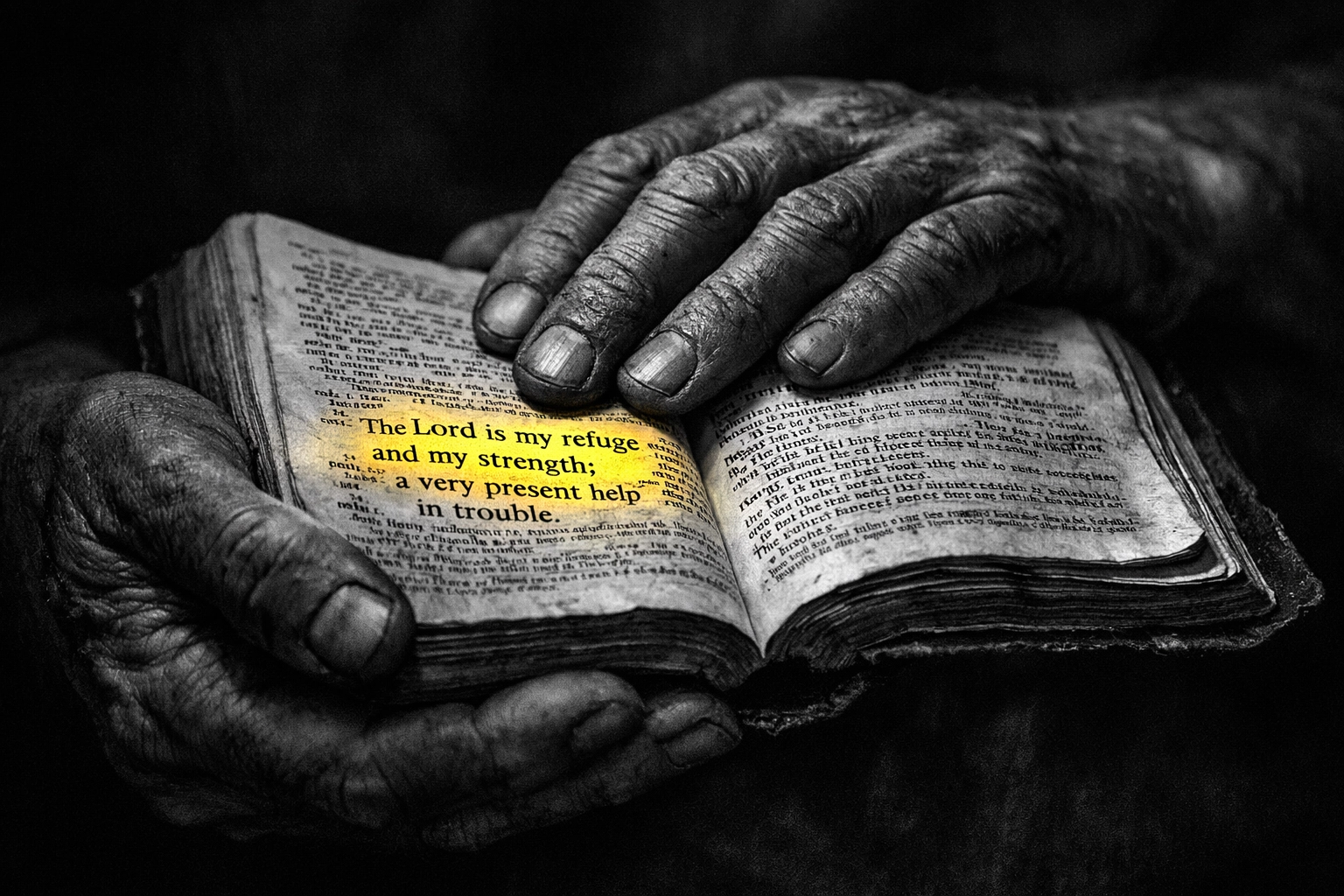
Biblical masculinity isn't about emotional suppression: it's about emotional authenticity grounded in relationship with God.
And here's what really challenged me: Jesus, the ultimate man, the perfect representation of masculinity, showed us something completely different than what culture celebrates. He washed His disciples' feet: a task reserved for the lowest servant. He said, "the Son of Man did not come to be served, but to serve, and to give His life a ransom for many" (Matthew 20:28, LSB).
Think about that. The strongest man who ever lived used His strength to serve and sacrifice, not to dominate.
Jesus had the power to summon legions of angels. He could have crushed His enemies. Instead, He chose the cross. He turned the other cheek. He loved His enemies. He said, "Blessed are the meek, for they shall inherit the earth" (Matthew 5:5, LSB).
That's biblical masculinity. Strength under control. Power used for sacrifice. Leadership through service.
The Foundation That Changes Everything
Here's what I've learned through my own stumbling journey: biblical masculinity starts with a proper relationship with God. Everything else flows from that.
Cultural masculinity builds your identity on what you do. Biblical masculinity builds your identity on whose you are.
I'm a son of God before I'm anything else. That relationship defines me. Not my accomplishments. Not my strength. Not how well I perform the cultural script. My worth comes from being loved by the Father, redeemed by the Son, and empowered by the Spirit.
When you ground your identity in God, everything changes. You're not performing for approval anymore. You're not measuring yourself against cultural standards that were designed to leave you feeling inadequate. You're free to become the man God actually created you to be.

Scripture gives us some clear principles for biblical manhood: humility before God, self-control over our appetites, protecting our family, providing for our family, leading our family in faith. But notice: every single one of these requires dependence on God, not independence from Him.
The cultural model says, "Be self-made. Pull yourself up by your bootstraps. You've got this." The biblical model says, "I can do all things through Him who strengthens me" (Philippians 4:13, LSB). It's admitting, "Apart from Me you can do nothing" (John 15:5, LSB).
There's a humility in biblical masculinity that culture sees as weakness. But it's actually where real strength comes from.
The Tension and The Choice
I'm not going to lie to you: living out biblical masculinity in a culture that celebrates the opposite is hard. Really hard.
You'll be misunderstood. When you choose to be vulnerable with your brothers, some people will see it as weakness. When you lead through service instead of dominance, some people won't recognize it as leadership. When you prioritize character over achievement, the world might overlook you.
I've felt that tension. I've been in rooms where the cultural version of masculinity is celebrated, and I've had to choose whether to play along or stand on what Scripture says. Sometimes I've failed. Sometimes I've given in to the cultural pressure because it felt easier in the moment.
But here's what I keep coming back to: which version of masculinity actually helps my faith journey? Which one draws me closer to Christ? Which one makes me more like Jesus?
Cultural masculinity keeps me focused on myself: my strength, my success, my image. Biblical masculinity keeps me focused on Christ: His character, His mission, His kingdom.
And honestly? Biblical masculinity is better for every relationship in my life too. My wife doesn't need me to be an emotionless stoic who never admits weakness. She needs a husband who loves her like Christ loved the church: sacrificially, humbly, with tenderness. My kids don't need a father who's always performing strength. They need a dad who's authentic, who admits when he's wrong, who shows them what it looks like to depend on God.

Jesus: The Pattern for Real Masculinity
When I get confused about what masculinity should look like, I go back to Jesus. Always Jesus.
He was strong enough to overturn tables in righteous anger, yet gentle enough to welcome children. He was confident in His identity, yet humble enough to wash feet. He spoke truth boldly, yet showed compassion to the broken. He had every right to defend Himself, yet chose silence before His accusers.
Jesus redefined strength as the power to sacrifice. He redefined leadership as the choice to serve. He redefined masculinity as character over performance, substance over image, faithfulness over cultural approval.
And here's the thing: He invites us to follow Him. "If anyone wishes to come after Me, he must deny himself, and take up his cross and follow Me" (Matthew 16:24, LSB).
That's the call. Not to be what culture says a man should be. But to be like Christ. To let His character shape ours. To let His priorities become ours. To let His definition of strength replace culture's hollow version.
Where Do We Go From Here?
So which is better for your faith journey? I think you know the answer.
Biblical masculinity aligns you with God's design and God's purposes. It grounds your identity in something that can't be shaken. It frees you from performing and allows you to actually become.
Cultural masculinity will leave you empty, isolated, and constantly striving for something you'll never quite achieve. It's a moving target designed to keep you insecure and buying whatever solution is being sold this week.
Let me ask you: What version of masculinity are you living by? When you make decisions, whose definition of manhood are you following? When you evaluate your worth as a man, what measuring stick are you using?
If you're exhausted from trying to live up to cultural standards, can I encourage you? There's another way. Jesus offers you an identity that isn't based on performance. He offers you strength that comes from dependence on Him. He offers you freedom from the pressure to have it all together.

The path of biblical masculinity isn't easier: it might actually be harder in some ways. But it's real. It's authentic. It's grounded in the unchanging character of God rather than the shifting standards of culture.
And ultimately, it's the only version of masculinity that will help you become the man God created you to be.
If this resonates with you, I'd encourage you to check out what we're doing at Man Up God's Way. We're a community of men who are tired of cultural definitions and hungry for what Scripture actually says. We're imperfect, we're honest, and we're committed to pursuing biblical masculinity together.
Because here's the truth: we weren't meant to figure this out alone. Biblical masculinity is lived out in brotherhood, in accountability, in honest community where we can admit our struggles and point each other back to Christ.
You in?
Soli Deo Gloria, Pastor Jody